


BLOG / ARTÍCULOS DE DREAMWERKS

Useful Products & Tools for Installing Dreamwerks Shower Kits
Ready to install a shower kit from Dreamwerks? You're already ahead of the game - Dreamwerks shower kits are designed to make the installation process as straightforward as possible, with model-specific installation manuals, downloadable guides, and installation videos for every unit they make. But even the best-designed shower kits require the right tools and products to install correctly. Whether you're working with complete shower kits, corner shower kits, or shower enclosure kits, having the proper equipment on hand before you start saves time, prevents damage, and gives you a result that looks and performs like a professional installation. This guide breaks down everything - tools, materials, and products - that you'll want on hand for a complete Dreamwerks shower kit installation from start to finish. What Tools Do You Need to Install a Shower Kit? To install a shower kit properly, you need a combination of measuring and leveling tools, drilling and fastening equipment, silicone sealant and adhesive, shimming materials for the base, and safety gear for handling glass panels. The exact list varies slightly by model, so always cross-reference with your Dreamwerks installation manual before starting. 1. Measuring and Leveling Tools Before a single panel goes up or a base gets set, accurate measurement and leveling are everything. This is the stage that determines whether your shower kit installation looks clean and professional - or ends up with gaps, unlevel surfaces, and doors that don't close properly. What you'll need: • Spirit level or digital level (48 inch minimum) - for checking walls and base alignment before and after installation • Tape measure - for confirming rough opening dimensions against your kit's specifications • Plumb bob or laser level - especially useful for corner shower kits where two walls must be perfectly square to each other • Carpenter's square - confirms wall corners are at 90 degrees before you begin attaching wall panels or door frames • Pencil and marking tape - for clearly marking substrate cut lines, screw positions, and drain center points Pro note: Dreamwerks installation manuals for shower enclosure kits call out specific maximum wall thickness tolerances at door mounting points. Measure your finished wall thickness before buying any supplementary materials - you may need to adjust your substrate thickness to stay within spec. 2. Drilling and Fastening Equipment Every shower kit installation involves driving fasteners into walls - whether you're anchoring wall panel support channels, securing door tracks, or fixing the base to the floor. The right drilling setup protects your tile and substrate from cracking and ensures anchors hold long-term. What you'll need: • Hammer drill or rotary drill - needed for drilling into tile, cement board, or masonry • Diamond-tipped tile drill bits - standard drill bits will crack ceramic or porcelain tile; always use tile-specific bits • Screwdriver set (Phillips and flathead) - for assembly of door hardware, channel profiles, and trim pieces • Power drill with driver bits - speeds up fastening of wall channels and base screws considerably • Masonry anchors and wall plugs - for anchoring into tile or cement board where studs are not accessible • Stud finder - critical for locating studs behind your substrate to anchor the heavy door tracks and wall jambs securely Important: For complete shower kits that include both wall panels and door sections, Dreamwerks manuals specify exact screw sizes and anchor types for each component. Do not substitute with whatever you have on hand - mismatched hardware can compromise the structural hold of the door frame over time. 3. Substrate and Wall Preparation Products One of the most important steps when you install a shower kit is getting the substrate right. Dreamwerks wall panels are thin - approximately 3.0 to 3.2 mm - and require a continuous rigid backer to prevent flex and long-term failure. This applies to all their shower kits, from standard rectangular units to corner shower kits. What you'll need: • Exterior-grade plywood (1/2 inch to 3/4 inch) - the recommended continuous backer for wall panels in most Dreamwerks installation manuals • Cement board (max 3/4 inch at door mounting points) - accepted as an alternative in select models; always verify with your specific installation manual • Waterproof membrane or vapor barrier - applied over the substrate before panels in wet zone areas for added moisture protection • Circular saw or jigsaw - for cutting plywood or cement board panels to fit your shower alcove or corner configuration • Sandpaper or rasp - for smoothing cut edges on substrate panels before installation 4. Products for How to Install a Shower Base Correctly Knowing how to install a shower base properly is arguably the most critical step in the entire process. A base that isn't level, isn't sealed correctly, or isn't supported properly will cause drain alignment issues, cracking, and water leakage - problems that are expensive to fix after the fact. Dreamwerks bases are molded from acrylic, fiberglass, or thermoplastic (ABS/PVC, depending on the model). They require specific products to install properly: • Plastic shims (non-compressible) - for leveling the base on uneven subfloors; never use wooden shims in wet areas as they can rot and compress over time • Mortar bed or base support foam - some shower base installations benefit from a mortar bed or pre-formed support foam beneath the base for full contact support • PVC-compatible sealant - for sealing the drain connection and the base perimeter; use a product that stays flexible after curing • 100% silicone caulk (mold-resistant formulation) - for sealing the joint between the base and the wall panels • Drain wrench or pliers with rag padding - for tightening the drain assembly without scratching the base surface 5. Sealing and Finishing Products The difference between a shower kit that lasts 5 years and one that lasts 20 often comes down to how well it's sealed at installation. Every joint, every edge, and every penetration point needs proper treatment. • 100% silicone caulk in matching color - for sealing panel-to-panel joints and panel-to-base joints; neutral cure silicone is best for acrylic and glass surfaces • Painter's tape - for masking clean, straight caulk lines at joints and trim edges • Caulk gun - for smooth, controlled silicone application • Denatured alcohol or surface prep wipes - for cleaning all bonding surfaces before applying silicone; silicone will not adhere properly to dirty or oily surfaces • Plastic trim tools or a wet finger - for smoothing caulk beads to a clean, professional finish • Grout or color-matched caulk - for any tile work around the shower enclosure perimeter 6. Safety Gear - Non-Negotiable for Any Shower Kit Installation Whether you're installing corner shower kits, full shower enclosure kits, or complete shower kits with glass door panels, personal protective equipment is not optional. • Cut-resistant gloves - rated for glass handling when moving wall panels or glass doors • Safety glasses - during all drilling, cutting, and silicone work • Knee pads - for base installation and floor-level work • Closed-toe, slip-resistant footwear - especially important on wet bathroom floors • Dust mask - when cutting cement board, which releases silica dust Quick Reference: Tool & Product Checklist for Dreamwerks Shower Kit Installation • Spirit level (48") + tape measure + carpenter's square • Stud finder + hammer drill + diamond tile bits • Exterior-grade plywood (1/2"–3/4") or cement board for substrate • Plastic shims for shower base leveling • PVC-compatible drain sealant + 100% silicone mold-resistant caulk • Masonry anchors for tile/cement board walls • Caulk gun + painter's tape + surface prep wipes • Cut-resistant gloves + safety glasses + knee pads • Model-specific Dreamwerks installation manual - downloaded before you start Final Thoughts Knowing how to install a shower kit is only half the equation. Having the right tools and products staged and ready before you begin is what separates a smooth one-day installation from a frustrating multi-day project. Whether you're tackling complete shower kits, corner shower kits, or full shower enclosure kits, the categories above cover everything you'll need. Dreamwerks makes the installation process as straightforward as possible with detailed, model-specific guides. But the tools and materials are your responsibility to source. Get them right, follow the manual, and your Dreamwerks shower kit installation will deliver a result that looks great and performs reliably for years to come.
Leer másBLOG / ARTÍCULOS DE DREAMWERKS

Tips for Installing & Moving a Frameless Sliding Shower Door
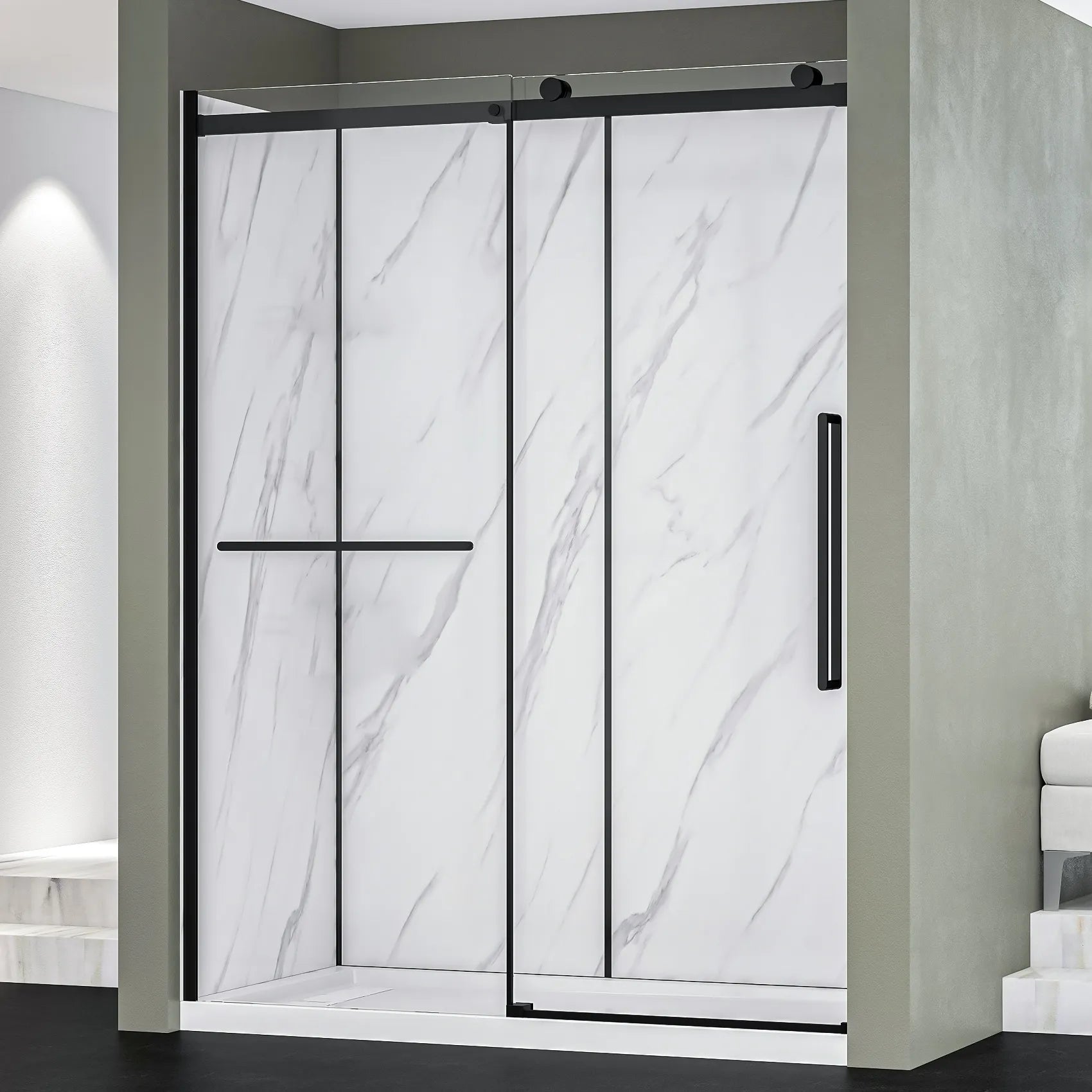
Frameless sliding shower doors are one of the most popular choices in modern bathroom design - and for good reason. They bring a clean, open look to any space, work beautifully as shower tub doors, and give bathrooms that high-end, spa-like feel. But as stunning as frameless shower doors are, they come with a unique set of safety challenges that framed doors simply don't. Whether you're installing brand-new glass shower doors or moving an existing unit during a renovation, the weight, size, and fragility of frameless glass demand respect. A single wrong move can result in serious injury, a cracked panel, or a door that never sits or slides correctly again. This guide covers 5 essential safety tips for anyone installing or moving a frameless sliding shower door - from luxury shower doors in a master bath to tub shower doors in a family bathroom remodel. Is It Safe to Install a Frameless Sliding Shower Door Yourself? Yes - with the right preparation, tools, and safety practices, installing or moving a frameless sliding shower door is a manageable project. The key risks are the weight of the glass panels, improper track alignment, and unsecured hardware. Following the 5 safety tips below reduces these risks significantly and helps ensure your shower door operates correctly for years. Tip #1: Never Handle Glass Shower Doors Alone This rule applies to every type of glass shower door - but it is absolutely non-negotiable with frameless sliding shower doors. A standard frameless glass panel can weigh anywhere from 50 to over 100 pounds, depending on glass thickness, and the panels used in luxury shower doors with 10 mm to 12 mm tempered glass are on the heavier end of that range. Tempered glass is strong under normal use but highly sensitive to uneven pressure on its edges and corners. If one person tries to carry or position a large panel solo, the uneven grip creates stress points that can cause the glass to shatter - and when tempered glass breaks, it shatters into hundreds of small fragments. The rule: Always have at least two people handling any glass shower door panel. For larger frameless panels over 60 inches tall, use three people or professional suction cup lifting tools designed for flat glass. Keep hands on the flat faces of the glass - never grip edges or corners bare-handed. Tip #2: Wear the Right Protective Gear - Every Time This one sounds obvious, but it gets skipped more often than you'd think, especially on quick repositioning jobs where someone decides to "just move it a few inches." With frameless shower doors, there is no such thing as a quick, casual adjustment. Before touching any glass shower door panel - whether you're doing a full shower door installation or simply sliding a panel off its track to clean the hardware - make sure everyone involved is wearing the following: • Heavy-duty cut-resistant gloves (rated for glass handling, not standard work gloves) • Closed-toe shoes with slip-resistant soles - glass fragments on a wet bathroom floor are a serious hazard • Safety glasses or goggles - especially during track installation or when drilling into tile • Long sleeves when carrying panels to protect forearms from edge contact This applies whether you're installing high-end luxury shower doors or standard tub shower doors - the glass behaves the same way regardless of price point. Tip #3: Verify the Track and Wall Anchor Points Before Lifting the Glass One of the most dangerous moments in any sliding shower door installation is lifting a heavy glass panel into a track that hasn't been properly secured. If the top track shifts, flexes, or pulls away from the wall while the panel is being positioned, the glass can slide, tip, or fall. Before the glass comes anywhere near the installation area, complete and verify all of the following: • Top and bottom tracks are fully secured to the wall and floor with the correct fasteners - anchored into studs or solid backing, not just tile or drywall • All wall jambs and side profiles are plumb and level - a sliding shower door panel that is even slightly out of square will bind or jump its track • Track screws are fully tightened and checked for any flex or movement • The floor track is sealed and positioned correctly per the installation manual - this is especially critical for shower tub doors where the track spans the tub deck Important: This step is where reading your specific shower door installation manual matters most. The best shower doors - particularly frameless sliding models - have precise tolerances, and the dreamwerks guide will specify exact anchor requirements, screw types, and track alignment procedures for your model. Tip #4: Lift Into the Track - Never Slide From the Side This is a technique tip that directly affects safety. When placing a frameless sliding shower door panel into its track, the correct method is to tilt the panel slightly inward and lift the rollers or hangers vertically into the top track first, then lower the bottom guide into position. The common mistake is trying to slide the panel in from the side of the track opening while holding it near-vertical. This approach puts lateral stress on the glass edge, increases the risk of the panel slipping, and can damage the rollers or track hardware if the panel catches at an angle. For frameless sliding glass shower doors, the safest lifting sequence is: 1. Position both installers on the same side of the glass, one at each end of the panel 2. Tilt the top of the panel slightly toward the top track - maintain control of the angle at all times 3. Lift vertically to engage the top rollers or hanging hardware into the track 4. Lower the bottom of the panel gently until the bottom guide seats correctly 5. Test the slide before releasing full weight This same method applies when you're moving an existing glass shower door - removing a panel for cleaning, resealing, or repositioning during a renovation. Come out the same way you went in: top first, bottom second. Tip #5: Inspect the Glass and Hardware Before and After Every Move Tempered glass used in frameless shower doors - including glass shower doors, shower tub doors, and luxury shower doors - can have invisible micro-fractures from shipping or previous handling. These fractures may not cause immediate failure, but a panel with an undetected edge chip or stress crack can shatter spontaneously under temperature change or minor impact. Before every installation or move, inspect the glass panel in good lighting: • Run gloved fingers carefully along all four edges - feel for chips, nicks, or irregularities • Hold the panel up to natural light and look for any cracks, stress lines, or white-edge damage • Check the corner holes (if any) for micro-fractures radiating outward - these are high-stress points • After installation, check all hardware connections: roller wheels, hangers, and bottom guides should move freely with no binding or grinding Bonus: What Makes the Best Shower Doors Easier and Safer to Install? Not all frameless sliding shower doors are equally easy to handle. When shopping for glass shower doors, these features make installation safer and the finished product more reliable: • Pre-drilled, precision-cut corner holes - reduces drilling on-site, which is a major risk point for glass cracking • Quality roller hardware with smooth, adjustable hangers - easier to seat in track and less likely to bind • Magnetic seals and soft-close stops - reduce impact stress when the door closes • Included model-specific installation manual with clear torque specs and anchor requirements • Serviceable hardware components - so you can replace a worn roller without replacing the entire shower door These qualities apply across the full range - from tub shower doors and everyday sliding shower doors to premium luxury shower doors in high-end bathroom remodels. Final Thoughts Frameless sliding shower doors are a beautiful, durable choice for any bathroom - but they deserve careful handling. The five safety tips above cover the most critical risks: going solo with heavy glass, skipping protective gear, rushing the track installation, using the wrong lifting technique, and missing damage before installation. Follow these steps whether you're working with shower tub doors, glass shower doors in a walk-in enclosure, or the most premium luxury shower doors on the market. The glass doesn't care about the price tag - it responds to how you handle it.

Common Shower Kit Installation Mistakes | How to Avoid Them
Installing a shower kit is one of the most rewarding bathroom upgrades you can make - but it's also one where small mistakes can lead to big headaches. Whether you're renovating a full bathroom or simply replacing an outdated unit, knowing what not to do is just as important as knowing the right steps. This bathroom guide walks you through the most common shower installation mistakes homeowners and contractors make - and exactly how to avoid them. From choosing the wrong substrate for your shower wall panels to skipping the installation manual, we have got you covered. What Are the Most Common Shower Installation Mistakes? The most common mistakes include using the wrong substrate behind shower wall panels, ignoring the installation manual, using mismatched base materials, incorrectly shimming the shower base, and assuming all shower kits have the same panel or glass thickness. Each of these can affect the durability, safety, and appearance of your finished shower. Mistake #1: Skipping the Installation Manual This is the number one mistake - and the most avoidable. Every shower kit is different, and the installation manual is written specifically for your model. Dimensions, substrate requirements, wall thickness limits, shimming instructions - all of it lives in that document. Manufacturers publish installation videos and downloadable manuals for every shower model on their websites. These are model-specific guides, which means what works for one unit may not apply to another. Always follow the manual that matches your exact product. Pro Tip: Download the installation manual before ordering your shower kit. Check substrate requirements and wall thickness specs so your space is already prepped when the kit arrives. Mistake #2: Using the Wrong Substrate Behind Shower Wall Panels Shower wall panels are thin and factory-formed - most are only around 3.0 to 3.2 mm thick (about 1/8 inch). Because of this, the backing you install them on matters enormously. A soft, uneven, or unsuitable substrate will cause panels to flex, crack, or fail over time. The standard requirement is a continuous exterior-grade plywood backer - typically between 1/2 inch and 3/4 inch thick. Some models also accept properly installed cement board, but the finished wall thickness where the shower doors mount must not exceed 3/4 inch. Always check your model's installation manual for the exact substrate specification before you start. What to avoid: Drywall or green board behind shower wall panels. These materials absorb moisture and will eventually cause the panels to separate, warp, or allow mold growth behind the wall. Mistake #3: Assuming All Shower Doors Have the Same Glass Thickness Not all shower doors are built the same, and glass thickness is a spec that many people overlook. Lighter shower door styles typically use 6.0 mm (approximately 1/4 inch) tempered safety glass, while heavier frameless or premium doors use 10 to 12 mm glass (roughly 3/8 to 1/2 inch). This difference affects how the door is mounted, what hardware is used, and how the frame or hinges are positioned. If you're replacing just the door - not the full shower kit - you need to confirm the glass thickness matches the existing hardware. Mixing glass weights with incompatible hardware is a safety risk. Remember: All quality shower doors use tempered safety glass. When in doubt, check the parts figures in your model's installation manual for the exact callout. Mistake #4: Not Leveling and Shimming the Shower Base Properly A shower base that isn't level causes water to pool in the wrong areas, puts stress on the drain connection, and creates visible gaps around the walls. This is one of the most common installation errors - and one of the hardest to fix after the fact. Most shower kit installation manuals specifically emphasize shimming the base until it sits completely level before securing it. This step cannot be skipped. Shower bases are molded from acrylic, fiberglass, or thermoplastic materials like ABS and PVC - materials that are rigid but not self-adjusting. If the floor beneath is uneven, the base will follow the floor unless you correct it with shims. Mistake #5: Substituting the Wrong Drain or Base When a shower kit comes with a base, it includes a specific drain center measurement. Swapping in a different base or drain without verifying the drain center location is a common mistake that results in either a misaligned drain or a base that doesn't sit flush. Always use the base included with your shower kit. If you need to substitute, verify the drain center before purchasing an alternative. Drain components are typically molded from polypropylene or PVC, and base materials are usually acrylic, fiberglass, or thermoplastic - all of which have specific chemical compatibilities with sealants and adhesives. Don't Forget the Rest of the Bathroom: Vanities, Cabinets, and Tubs Shower installation doesn't happen in isolation. If you're doing a full bathroom renovation, you're also likely dealing with vanity cabinets, vanity tops, LED medicine cabinets, and possibly freestanding bathtubs. Each of these has its own installation considerations. Vanities and Vanity Tops Vanity cabinets should be moisture-resistant - look for MDF or composite construction with properly sealed panels. Vanity tops in engineered marble or quartz are typically around 3/4 inch thick. A common mistake is anchoring vanities to drywall alone. Always fasten into wall studs, especially when the vanity top is made from stone or engineered marble. LED Medicine Cabinets LED medicine cabinets with integrated dimming and defogger features require a proper electrical connection - this is not a DIY step unless you are qualified. The good news is that LED drivers and bulbs in quality medicine cabinets are typically serviceable, meaning you can replace components without replacing the entire unit. Always confirm the cabinet is rated for bathroom use and that wiring meets local code. Freestanding Bathtubs Freestanding bathtubs are typically acrylic. A common mistake is using harsh chemical cleaners that damage the acrylic surface. Always use acrylic-safe cleaning products. Also, confirm the floor can support the combined weight of the tub, water, and occupant before installation - freestanding tubs filled with water can be extremely heavy. Quick Reference: Shower Installation Checklist • Read your model-specific installation manual before starting • Confirm substrate: continuous exterior-grade plywood (1/2"–3/4") or cement board per manual • Verify finished wall thickness does not exceed 3/4" at door mounting points • Level and shim your shower base before securing • Use the base and drain included with your shower kit - verify the drain center if substituting • Confirm glass thickness (6 mm for lighter doors, 10–12 mm for frameless) matches hardware • Use moisture-resistant materials throughout - vanity cabinets, substrate, and sealants • Have a qualified electrician handle LED medicine cabinet wiring • Use acrylic-safe cleaners on freestanding bathtubs and acrylic shower bases Final Thoughts A successful shower kit installation comes down to preparation and following your installation manual. Most mistakes happen when people skip specifications, assume one size fits all, or rush through substrate and leveling steps. Take the time to read your model-specific guide, use the right materials, and confirm every measurement before you commit. Whether you are installing a complete shower kit with wall panels and shower doors, or building out a full bathroom with vanities, LED medicine cabinets, and a freestanding bathtub - the details matter. Get them right, and you will have a bathroom that looks great and lasts for years.