



If you've ever pulled up caulk near your bathroom sink and found soft, discolored drywall behind it, you already know how sneaky water damage can be. It doesn't happen overnight - it creeps in through tiny gaps around the backsplash, drips down the wall, and sits there until the damage is done. A ceramic vanity top, installed and sealed the right way, is one of the simplest fixes for a problem that causes some of the most expensive bathroom repairs.
This guide covers why water finds its way behind vanity walls in the first place, what makes a ceramic vanity top such a solid defense, and how to pick a style and material that actually holds up over the long run.
Most homeowners don't think about their vanity top until something goes wrong - a soft spot in the wall, a musty smell that won't go away, or paint that starts bubbling near the backsplash. By then, you're usually looking at cutting into drywall, dealing with mold, and redoing work that a properly sealed top would have prevented in the first place. The good news is that fixing or preventing this is far simpler than most people expect.
Why Water Sneaks Behind Your Vanity Wall
Most water damage near a bathroom sink doesn't come from a dramatic leak. It comes from small, repeated splashes that find their way into gaps most homeowners never think to check.
A few common culprits:
• A backsplash that isn't sealed tightly to the wall
• Cracked or missing caulk where the countertop meets the drywall
• A separate basin and countertop with a seam that traps water
• Porous countertop materials that soak up moisture instead of shedding it
An integrated sink vanity, where the basin and top are molded as one continuous piece, removes one of the biggest culprits on that list entirely. There's no seam between sink and counter for water to slip through in the first place.
What Makes a Ceramic Vanity Top Different
A ceramic vanity top is fired at high heat into a dense, glass-like surface that barely absorbs any moisture. That non-porous quality is what sets it apart from softer, more porous countertop materials, and it's a big reason ceramic shows up so often on smaller, budget-friendly vanities that still need to perform well in a wet environment.
Here's what a ceramic top brings to the table:
• Non-porous surface that resists staining and won't soak up standing water
• One-piece molded construction on most integrated sink vanity styles, so there's no seam around the basin to reseal every year
• Easy cleanup - a damp cloth and mild cleaner is usually all it takes
• Consistent color and finish that won't fade or discolor the way some composite materials can over time
Because the surface sheds water instead of holding onto it, a properly installed ceramic vanity top gives less moisture a chance to ever reach the wall behind it. It's also worth noting that ceramic holds up well against everyday bathroom chemicals - toothpaste, hand soap, and most household cleaners won't dull the glaze the way they can wear down softer materials over years of daily use.
Comparing Vanity Top Materials
Ceramic isn't the only option out there, and it helps to know how it stacks up against the other materials you'll run into while shopping.
Carrara Marble Vanity
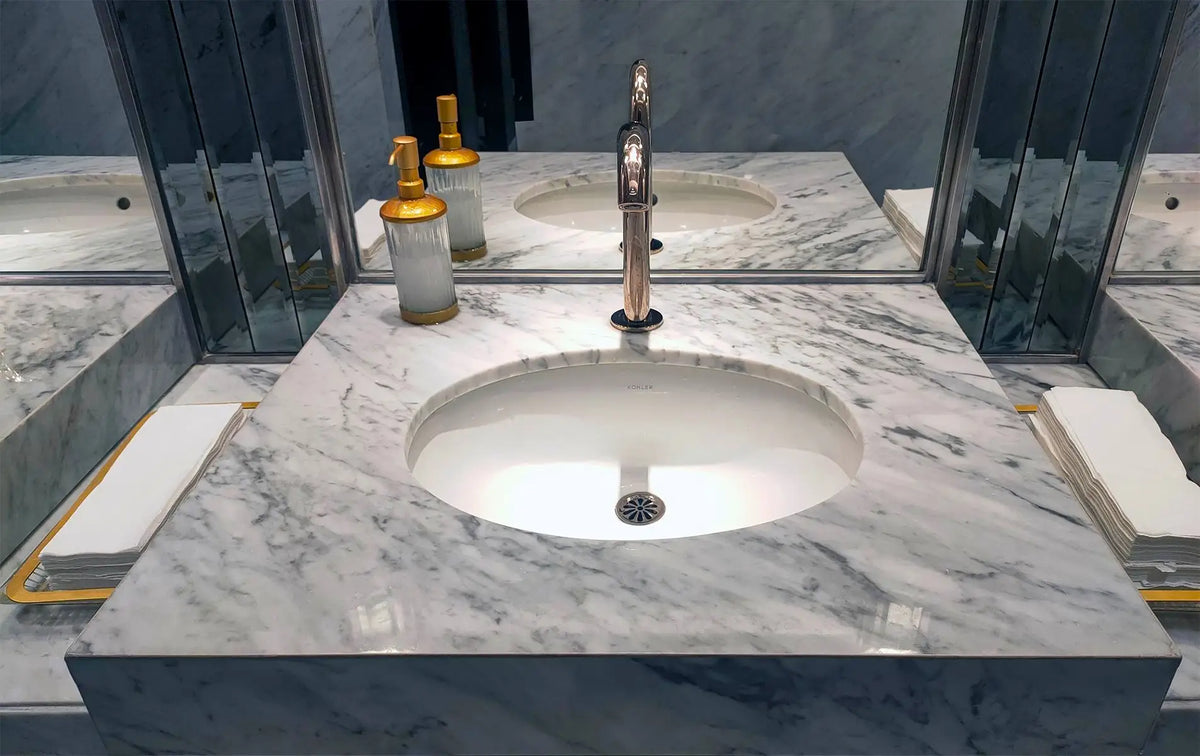
A carrara marble vanity brings a genuine, high-end look that's hard to match with man-made materials. The soft gray veining is unique to every slab, which is part of the appeal, but natural marble is porous and needs periodic sealing to keep water and staining agents from soaking in over time.
Marble Vanity Top
A marble vanity top in general - whether it's Carrara or another natural stone - delivers a classic, upscale appearance that photographs beautifully. The tradeoff is maintenance: marble scratches and etches more easily than ceramic, so it's a better fit for homeowners willing to reseal occasionally in exchange for that natural stone look.
Cultured Marble Vanity
A cultured marble vanity splits the difference. It's a manufactured material made from crushed marble and resin, molded to look like natural stone while staying non-porous and low-maintenance. It's a common middle-ground pick for homeowners who like the marble aesthetic but want something closer to ceramic's easy care.
Choosing the Right Vanity Style for Your Bathroom
Material is only half the decision - style matters just as much for how the finished bathroom feels day to day.
A white bathroom vanity is the most popular choice for good reason. It brightens smaller bathrooms, matches almost any tile or paint color, and tends to hide water spots less obviously than darker finishes. If you want something bolder, a red bathroom vanity can act as a statement piece in a powder room or guest bath where you want a little personality without committing an entire room to the color.
For layout, a wall mounted bathroom vanity is worth considering if floor space is tight or if you like the look of a "floating" cabinet. Mounting it off the floor also makes it easier to mop underneath and spot any early signs of moisture before they turn into a bigger problem.
Whatever combination you land on, shopping from full vanity collections rather than piecing together mismatched parts tends to save headaches. Coordinated collections are built so the cabinet, top, and hardware fit together correctly the first time, which cuts down on the gaps and misalignments that let water sneak through later. Dreamwerks organizes its lineup this way, with high quality vanities grouped by size, material, and finish so it's easier to find pieces that were actually designed to work together.
Installing and Sealing to Prevent Water Damage
Even the best ceramic vanity top will let water through if it isn't sealed properly during installation. A few habits make a real difference:
1. Run a continuous bead of 100% silicone caulk where the backsplash meets the wall - skip painter's caulk, which isn't built for constant moisture
2. Press the top firmly against the wall before the caulk sets, so there's no gap left behind
3. Wipe away excess caulk immediately for a clean, tight seal
4. Let the caulk cure fully before running water near the seam
5. Check the seal every few months and touch it up at the first sign of cracking or peeling
This is also where a one-piece molded top has an edge - with one less seam to manage, there's simply less surface area where a sealing mistake can let water through.
Quick Answers to Common Questions
Is a ceramic vanity top a good choice for a small bathroom?
Yes. Ceramic tops are common on compact and budget-friendly vanities because they're durable, easy to clean, and typically more affordable than natural stone or manufactured stone alternatives.
Does a manufactured stone top need to be sealed like natural marble?
No. This kind of material is manufactured to be non-porous, so it doesn't require the periodic sealing that natural marble does.
What's the difference between a white bathroom vanity and a bolder color in terms of maintenance?
Color doesn't change how the material performs - a white finish and a red bathroom vanity made from the same ceramic or marble top will hold up the same way. Color is purely a style choice.
Are wall mounted bathroom vanity styles harder to install?
They typically require solid blocking behind the drywall to support the weight, so it's a slightly more involved install than a floor-standing model, but the payoff is easier cleaning and a more open-feeling bathroom.
Why do matched, high-quality vanities matter for preventing leaks?
Pieces designed together as a coordinated set tend to fit more precisely than mismatched parts, which means fewer gaps and a tighter, more reliable seal around the top.
How long does a properly sealed vanity top typically last before it needs attention?
A quality silicone seal usually holds up for two to three years before it needs a fresh bead, though it's smart to give it a quick visual check every few months. Catching a small crack early is a five-minute fix - waiting until water actually gets behind the wall turns it into a much bigger project.
Final Thoughts
Water damage behind a bathroom wall almost always starts small - a hairline gap in the caulk, a seam that was never quite sealed, a countertop material that soaks up more than it should. A ceramic vanity top tackles the problem at the source with a non-porous surface and, in most integrated designs, one less seam to worry about. Shopping coordinated vanity collections rather than mismatched parts makes it easier to achieve that tight seal from day one. Pair the right material with a careful installation, and your wall stays dry, your vanity stays looking new, and you skip the expensive repair down the road.


