



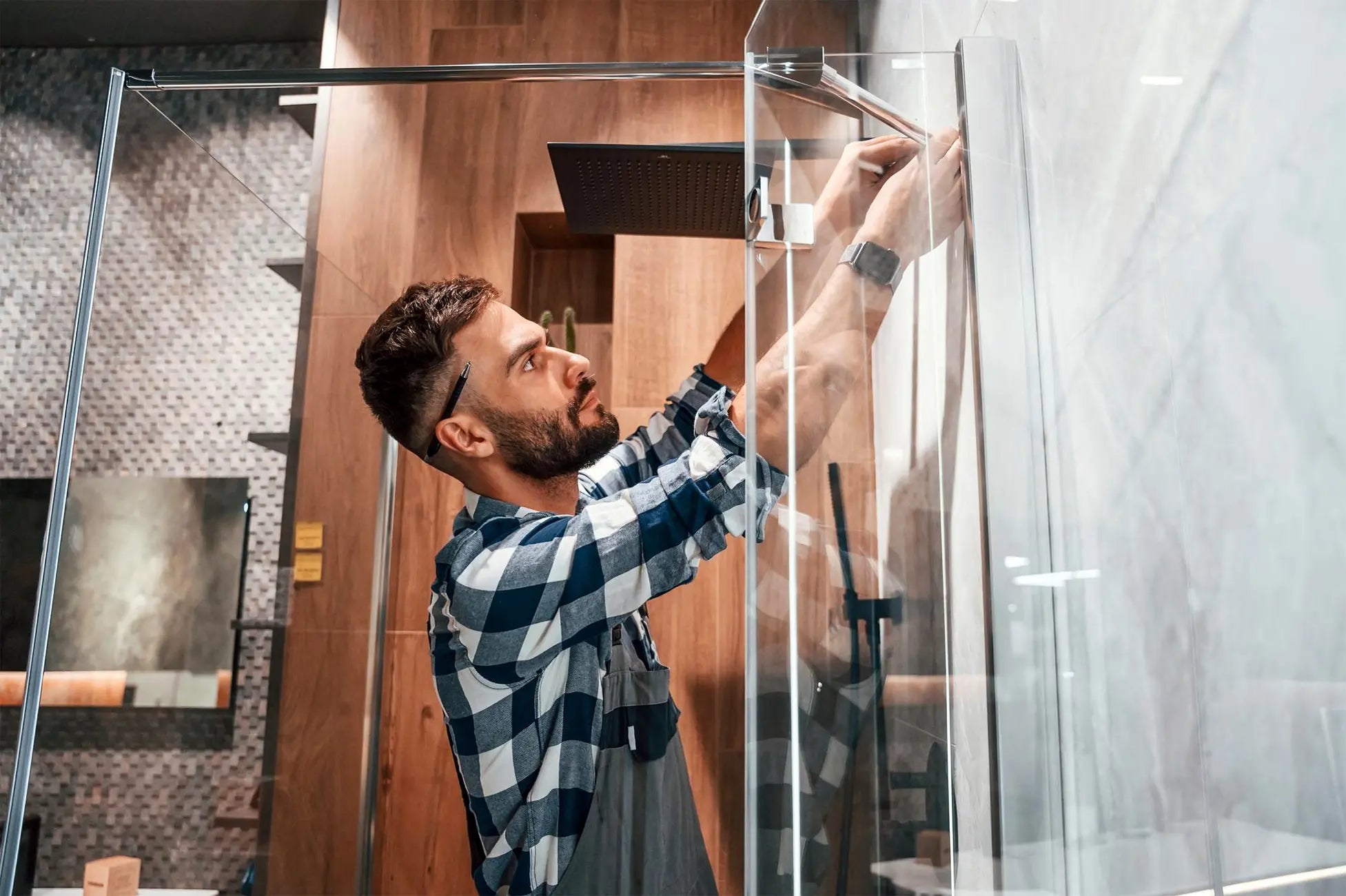
If you just bought one of those gorgeous shower enclosure kits and now you're staring at a panel of glass wondering how in the world it's supposed to line up - you're not alone. Aligning the glass is honestly one of the trickiest parts of the whole installation, but once you understand what you're doing, it becomes a lot less stressful. This guide walks you through the whole thing in plain English, step by step, so you can get it done right the first time.
Why Getting the Glass Alignment Right Actually Matters
Let's be real - a slightly crooked glass panel isn't just an eyesore. It can cause leaks, put uneven stress on the hinges, and make your shower door drag or not close properly. Whether you're working with corner shower kits that have two glass panels meeting at a 90-degree angle, or a simpler single-door setup, the alignment affects everything: how the door seals, how it swings, and how long the whole thing lasts.
The good news is that most modern complete shower kits are designed with some built-in adjustment. The hardware - those little hinges, clips, and brackets - can usually be tweaked a bit to fine-tune the position. You just need to know where to look and what to adjust.
What You'll Need Before You Start
Before you dive in, make sure you've got these basics ready:
• A level (a 4-foot level is ideal, but a 2-footer works too)
• A pencil or painter's tape for marking
• A screwdriver or drill with the right bits
• A rubber mallet (optional but helpful)
• A helper - glass panels can be heavy and awkward
• The instruction manual that came with your kit
That last one matters more than people think. Every kit is a little different. The manual should tell you the exact gap tolerance and the order in which to secure things.
Step 1 - Install Shower Base First (Don't Skip This)
A lot of people jump straight to the glass, and that's where things go sideways. Before you can install shower base properly and align the glass above it, the base needs to be level - and I mean actually level, not "close enough." Even a slight tilt in the base will throw off your glass panels because they're installed on top of it or adjacent to it.
Use your level to check the base in both directions - side to side and front to back. If it's off even a tiny bit, shim it up before doing anything else. Once the base is sitting perfectly flat, you've got a solid foundation to work from, and aligning the glass becomes much more predictable.
Step 2 - Mark Your Wall Lines Before Touching the Glass
Here's a pro tip that saves a ton of headaches: use your level and a pencil to draw plumb vertical lines on the wall where the glass panels will sit. These lines become your reference points throughout the whole process.
If you're working with corner shower kits, draw lines on both walls. They need to be perfectly vertical, not just parallel to the corner, because bathroom walls aren't always perfectly square. Your glass panels, on the other hand, need to be truly plumb. Marking the lines first means you can position the channels and brackets exactly where they need to go - before any holes get drilled.
Step 3 - Mount the Wall Channels or U-Channels
Most shower kits use U-shaped channels (sometimes called wall profiles) to hold the glass in place. These get mounted to the wall first, and then the glass slides in - or the panel gets pressed into them during install.
How to Get the Channels Straight
1. Hold the channel up against your pencil line and check it with your level.
2. Mark the drill holes lightly with your pencil.
3. Drill, insert wall anchors if needed, and screw the channel in - but don't fully tighten yet.
4. Recheck plumb with your level before fully securing.
Leaving the screws slightly loose during initial placement gives you a little wiggle room to adjust once the glass is in. Tighten everything fully only after the glass is confirmed straight.
Step 4 - Setting the Glass Panel in Place
Now comes the part that makes people nervous. Lifting and positioning a glass panel - especially a tempered glass one - is not a one-person job. Have your helper hold the panel steady while you guide it into the channel.
The bottom of the panel typically sits in a bottom channel or on rubber setting blocks that rest on top of the shower base. Once it's resting in place, step back and take a look from across the room. Your eye is actually a great first check - if something looks off, it probably is.
Then use your level against the face of the glass to confirm it's truly vertical. Check from two different spots - top third and bottom third of the panel. If the panel is tilting, you'll adjust the channel position or use the adjustment screws on the brackets (more on that below).
Step 5 - Fine-Tuning Alignment with Adjustment Screws and Brackets
This is where shower kit installation goes from "pretty close" to "actually perfect." Most quality shower kits - including frameless and semi-frameless designs - have hinges or pivot brackets with adjustment screws built in.
Common Adjustments You Can Make
• Vertical height: Raise or lower the panel slightly by adjusting the bottom bracket.
• Horizontal tilt: Tighten or loosen screws on one side to bring the top into plumb.
• In-and-out depth: Some brackets let you move the glass slightly forward or back so it lines up flush with the edge of the base or adjacent wall.
Make these adjustments gradually and check your level after each one. Small moves make a big difference with glass. Don't try to force anything - if something feels like it's really fighting you, double-check that your channels are correctly positioned first.
Step 6 - Checking the Gap Between Glass Panels
If you're working on how to install shower kit panels that meet at a corner or overlap (like a sliding door setup), you need to check the gap between the panels. A consistent gap - usually around 3/16 inch to 1/4 inch for frameless designs - is what you're after.
Use a spacer card or a piece of cardboard cut to the right thickness and run it along the gap from top to bottom. If the gap gets tighter at the top or bottom, go back and adjust whichever panel is causing it. An uneven gap means water will eventually find its way through - even with a sweep in place.
Step 7 - Securing Everything and Applying Silicone
Once you're happy with the alignment, it's time to lock things down. Tighten all the screws - hinges, channels, brackets - and do one final level check to make sure nothing shifted.
Then apply a bead of clear silicone caulk where the glass panels meet the wall channels and where the bottom channel meets the shower base. Silicone is what creates the waterproof seal, so don't skip it or skimp on it. Smooth it with a wet finger or a caulk tool and let it cure for 24 hours before using the shower.
This part of how to install shower components correctly is easy to rush - but giving the silicone its full cure time is what separates a professional-looking job from one that leaks within a week.
Common Alignment Mistakes (And How to Avoid Them)
• Skipping the base level check: The most common reason glass won't align is a tilted base. Always level the base first.
• Over-tightening too soon: Lock everything down before the glass is fully aligned, and you'll be fighting yourself to adjust it.
• Not using a long enough level: A 12-inch level won't catch a subtle lean on a 72-inch glass panel.
• Ignoring out-of-square walls: Your walls might not be 90 degrees. The glass should be plumb regardless - not parallel to the wall.
• Rushing the silicone cure: Using the shower too soon will break the seal before it's set.
A Note on Install a Shower Kit for Corner Setups
When you install a shower kit designed for corners, you've got two glass panels and two walls to work with - which means twice the opportunity for misalignment. The key is to set up one panel completely before touching the second. Get the first panel perfectly plumb, then use it as your reference point to position the second.
With shower kits that use a corner post or a vertical bar to join the two panels, that post is the centerpiece of your alignment. If the post isn't level, nothing else will be. Spend the extra time here - it's worth it.
Final Check Before You Call It Done
Before you pack up your tools, run through this quick checklist:
• Both glass panels (if applicable) are plumb - checked with a 4-foot level
• The door swings freely and the gap is consistent all the way around
• All screws and hardware are fully tightened
• Silicone is applied everywhere glass meets a fixed surface
• The door seal or sweep makes full contact with the glass or threshold
If you can check all five boxes, you did it right. Good alignment on shower kits isn't just about looks - it's what makes the whole system work the way it's supposed to for years down the road.
Wrapping It Up
Getting the glass aligned on shower enclosure kits isn't something you have to guess at. It's a process - start with a level base, mark your plumb lines, set your channels, position the glass, and fine-tune with the adjustment hardware. Take it one step at a time and don't rush the final silicone step.
Whether you're going full DIY or helping a contractor understand what you want, knowing this process puts you in control. And honestly, once it clicks into place - perfectly aligned, sealed tight, looking sharp - it's a pretty satisfying thing to step back and look at.


